Pete Gendron
Young Captain Jack · The Son of a SoldierPete Gendron is a predatory guerrilla and accomplice of Dr. Mackey whose presence turns wartime disorder into a personal conspiracy. First encountered while attempting to steal horses from the Ruthven plantation, he is wounded, recognized as an old associate of Dr. Mackey, and then used by the doctor in the abduction of Jack Ruthven. Gendron’s bitterness, greed, and knowledge of the tin box make him a dangerous but ultimately incomplete witness: he knows enough to threaten Dr. Mackey, yet dies before fully exposing the doctor’s history.
Identity and Introduction
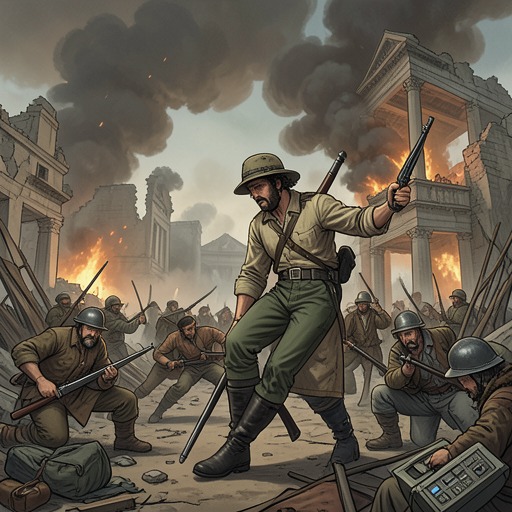
Gendron appears among the “rascally looking guerrillas” who follow a passing cavalry force, men described as fighting chiefly to loot afterward. At the Ruthven homestead, Jack Ruthven and the local Home Guard defend the property because it is private land and the house has become a hospital for six wounded Confederates. Gendron belongs to the force that disregards those protections. He later leads an attempt to steal several horses from the stable, where Old Ben and two Home Guard boys confront three guerrillas. The attempted theft establishes Gendron’s practical identity before he is given any backstory: he is an armed marauder treating wartime confusion as an opportunity for personal gain.
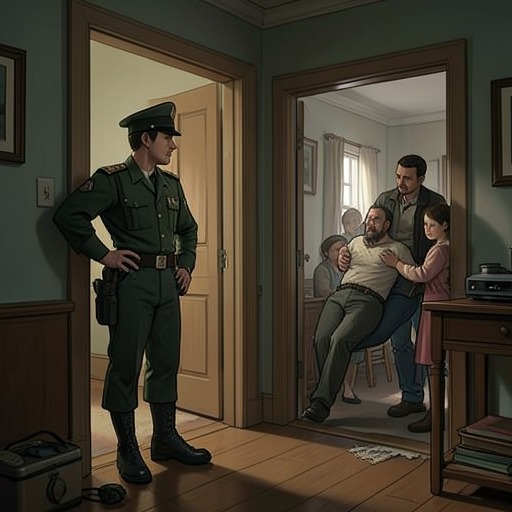
Jack Ruthven reaches the stable during the struggle and shoots the guerrilla who is trying to steal the horses. That wounded man is Gendron. His injury brings him into direct contact with Dr. Mackey, who is serving as a surgeon at the plantation. Gendron recognizes the doctor and asks for his help, while Dr. Mackey reacts with surprise at seeing him. The encounter therefore joins two apparently separate dangers—the guerrilla raid and the doctor’s disputed claim that Jack Ruthven is his son—and reveals that they are connected by an earlier criminal association.
Alliance with Dr. Mackey
Gendron immediately tries to use Dr. Mackey’s medical and social authority to escape responsibility. He denies being a guerrilla and insists that Dr. Mackey can prove his claim, calling the doctor a friend. Jack Ruthven rejects this attempted transformation of identity; Gendron’s own conduct at the stable, rather than the doctor’s word, defines him as a guerrilla. The scene shows how labels such as surgeon, friend, and guerrilla carry practical consequences when armed men control the situation.
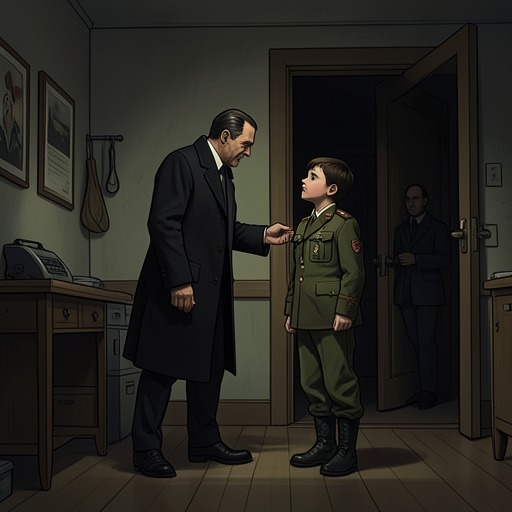
Dr. Mackey chooses complicity over impartial medical or military conduct. After Jack Ruthven defiantly calls him a fraud, the doctor seizes Jack by both arms and summons Confederate soldiers, ordering them to conduct the young man to camp and prevent his escape. The doctor thereby converts Gendron’s injury into an instrument of coercion. Gendron does not need to overpower Jack himself; Dr. Mackey’s authority supplies the soldiers, the command, and the pretext for removing him.
Once Jack has been taken away by the back route under guard, Dr. Mackey gives Gendron medical attention and makes an explicit bargain with him: Gendron is to stand by the doctor, and the doctor will stand by Gendron. The doctor then instructs him to mislead anyone from the house by saying that Jack has gone to obtain a Confederate ambulance corps. Gendron is thus not merely a beneficiary of Dr. Mackey’s protection. He becomes an active participant in concealing Jack’s abduction, while Dr. Mackey becomes responsible for protecting a wounded horse thief and suspected outlaw.
Captivity and Knowledge of the Tin Box
Gendron’s disappearance helps expose the abduction. When Old Ben returns unable to find Jack, he reports that the guerrilla who was shot while trying to steal the horses has also vanished. The paired disappearances make clear that Gendron and Dr. Mackey’s conspiracy has removed Jack from the plantation together, despite the doctor’s demand that Jack remain available for any legal proceedings concerning his paternity.
Jack later encounters the men who marched him away and sees Gendron lying on blankets in the shade. The guerrillas capture Jack and his Black companions, and the prisoners spend two days in the guerrilla cave. The captors treat them brutally and provide barely enough food to prevent starvation. Gendron is not badly wounded by then, and his physical recovery intensifies rather than softens his hostility. He repeatedly insults Jack and declares that, if he were Dr. Mackey, he would shoot him and take the money for himself.
That threat reveals Gendron’s central motive and his special leverage over Dr. Mackey. When Jack asks what he knows about the money, Gendron states that he knows all about the doctor’s private papers, the papers carried in the tin box, and confirms that they concern property. The tin box is not simply a valuable object recovered from a wreck; in Gendron’s account it contains documentary evidence tied to property and fortune. His knowledge explains why he can threaten Dr. Mackey and why the doctor has reason to keep him close while also fearing him.
Death and Narrative Consequences
Gendron’s alliance with Dr. Mackey ends without a full confession. On the day after Jack Ruthven returns home, a long battle in the mountains takes place between Federal troops and the guerrillas. Several outlaws are killed, including those who held Jack prisoner, and Gendron dies in the fighting. His death closes off one line of testimony: he never reveals everything he knows about Dr. Mackey’s past.
The destruction of the guerrilla camp nevertheless produces material evidence that Gendron could not destroy or explain away. A search uncovers goods stolen from a trader attacked during the storm, along with other valuables and the tin box taken from the wreck of the Nautilus. The box and its contents are eventually given to Colonel Stanton. Colonel Stanton recognizes the papers as his own precious documents and tells Jack Ruthven that nothing now stands between them and their fortune. Gendron therefore fails as a living informant but remains part of the chain through which the stolen evidence is recovered.
Gendron’s death also sharpens the contrast between legitimate wartime authority and predatory violence. Colonel Stanton respects the Ruthven property and its hospital, whereas Gendron’s band treats private land, wounded men, horses, and prisoners as resources to seize. Dr. Mackey’s conduct places him beside Gendron: although he speaks through medical and legal claims, he uses armed confinement, deception, and personal violence for private ends. Gendron’s role is consequently larger than that of a minor outlaw. He is the visible criminal counterpart of Dr. Mackey’s respectable imposture, and his incomplete knowledge keeps the doctor’s past partly obscured even as the recovered tin box helps defeat his claims.
Narrative Function and Significance
Gendron serves as a link between the novel’s separate strands of war, property, identity, and family. His attempted horse theft brings him into the plantation narrative; his recognition of Dr. Mackey connects the guerrilla raid to the disputed fatherhood claim; his knowledge of the tin box connects the criminal underworld to the Stanton fortune; and his death leaves the final reconstruction to physical documents and Colonel Stanton’s testimony.
His treatment of Jack also demonstrates how captivity operates through overlapping forms of power. The guerrillas use guns, hunger, confinement, and insult, while Dr. Mackey supplies the first act of forced removal and disguises it as an official transfer to camp. Gendron’s own speech reveals that he understands the doctor’s secrets, but his greed prevents him from becoming a trustworthy ally or witness. He is both subordinate and threat: dependent on Dr. Mackey’s protection because of his wound, yet dangerous because he knows about the papers and the money.
In the ending, Gendron is denied the power to control the story he has helped endanger. He dies before exposing Dr. Mackey’s complete past, but the camp search recovers the stolen tin box, and the documents restore Colonel Stanton’s claim to his fortune. The character thus embodies the instability of outlaw power during wartime: violence can seize people and objects, but it cannot permanently erase the evidence those seizures leave behind.